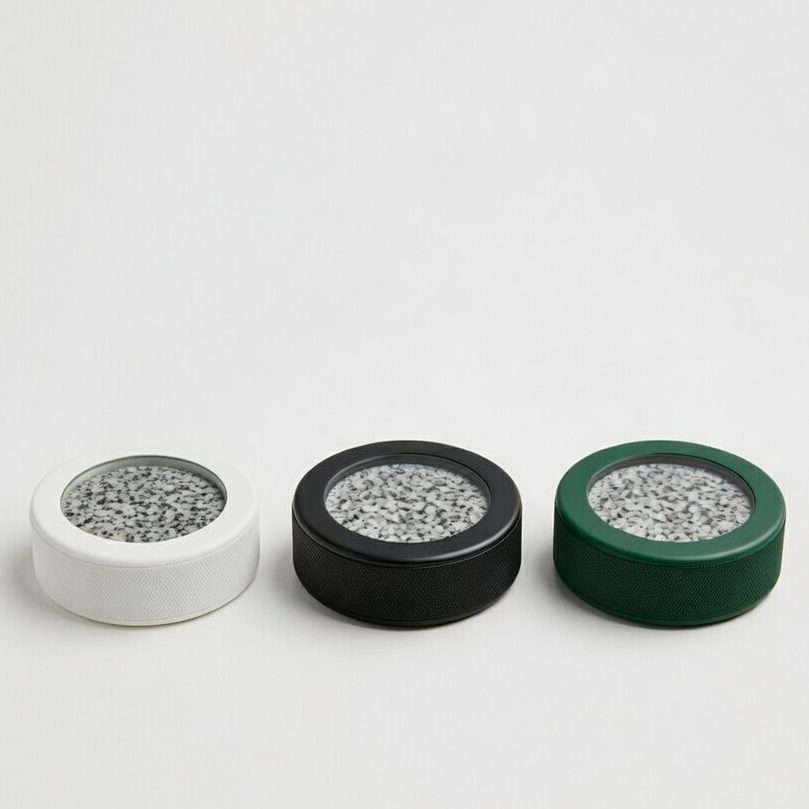
SPUR
ZERO-KNOWLEDGE VERIFICATION OF AUTHORITY
UNCLONABLE
DURABLE
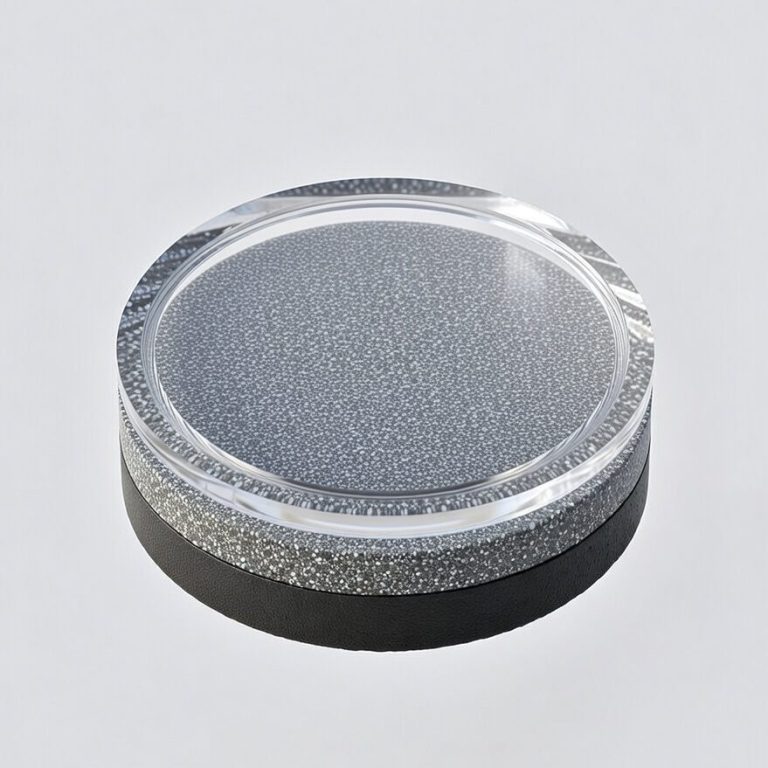
QUANTUM
SOVEREIGN
Who is the using a digital Private Key?
Metaphysics of the Machine Economy.
If humans and robots are simply arrangements of atoms governed by electrical signals,
"Who has the right to use the Key"
becomes
"How do we verify the Authority?"
The SPUR is the definitive, non-arbitrary difference between an unauthorized signal and an authorized act.
It is the "Physical Firewall" for both biology and silicon.
1. The Problem of "Digital Sameness"
In a purely digital world, a human’s signature and a robot’s signature are identical strings of 0's and 1's.
Without a SPUR, the blockchain cannot tell if a private key was triggered by a conscious human intent, a pre-programmed bot or a malicious hacker.
Unlike biometrics, which are vulnerable to AI-generated deepfakes and tie your assets to a permanent, hackable digital identity, a SPUR provides the option of "Authority without Identity" by anchoring your power to act in an irreproducible physical substrate that cannot be copied, simulated, or remotely drained.
While biometrics can be optionally layered to enhance user-specific binding, the SPUR remains the definitive anchor of prowess, ensuring that sovereign authority is governed by the laws of physics rather than the vulnerabilities of digital data.
2. The SPUR as the "Atomic Anchor" of AUTHORITY
The SPUR (SUMNER Physical Unclonable Responder) moves the proof of authority out of the "Digital Realm" (where humans and robots are indistinguishable) and into the "Physical Realm."
For the Human: The SPUR is the Physical Twin. It proves that the human (a unique collection of atoms) is physically interacting with a unique substrate (another unique collection of atoms).
For the Robot: The SPUR is the Silicon Soul's physical twin. It ensures that the robot's actions are tied to its specific, irreproducible hardware. It prevents a "Software Virus" from pretending to be the robot; the virus can have the code but it cannot have the Atomic Topology of the robot’s specific SPUR.
3. Action vs. Permission: The Definitive Difference
The distinction between Action and Authorised Permission is where the SPUR creates the "Stranglehold":
Action (The "What"): Both a human and a robot can send a "Transfer 1 BTC" signal. This is just an electron flow.
Permission (The "Why"): In traditional systems, permission is a digital password. It is weak because it is "information" that can be duplicated.
The SPUR (The "Authorizer"): The SPUR provides Authority. It is the "Physical Evidence" that the action originated from a specific, authorized physical entity.
The result: The SPUR is the only thing that proves an act is Authorized rather than just Executed.
4. The Philosophical Symmetry
If a human is "atoms operated by electrons," then a human is essentially a Biological SPUR. We are unique, unclonable, and physical.
By using a Synthetic SPUR, SUMNER gives the digital world a way to "see" that physical uniqueness.
It is the bridge that allows the Bitcoin Ledger (The Immutable Judge) to verify that a physical entity, whether meat, rock, crsytal or metal, has the specific Constitutional Right to move an asset.
The Commercial Realization
SUMNER's fully patented SPUR solution is ground-breakng.
While others are trying to prove "humanity" (which is hard to define and easy to fake with AI), the SPUR brings "Physical Uniqueness", being a law of physics.
For a bank, exchange or custodian:
They don't care if the client is a human or a robot.
They care that the Authority is physically tied to a SPUR substrate that cannot be hacked, copied, or "Deep-Faked."
The SPUR is the Physical AUTHORITY that makes an action legally and technically final.
Please mail us to show your interest in our SPUR System and join our member list
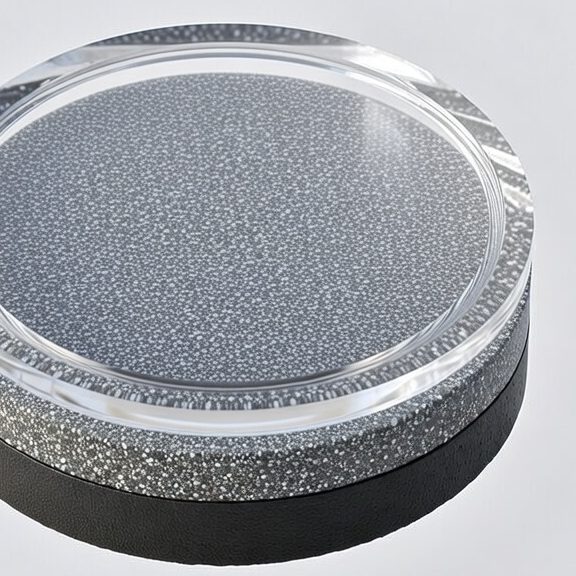
SPUR
THE MISSING LINK IN BITCOIN'S & CRYPTO'S CONSTITUTION
Bitcoin solved one half of the sovereignty problem with extraordinary elegance. It eliminated the need to trust any institution with the settlement of value. The ledger is the authority. The protocol is the law. No bank, no government, no intermediary can prevent a valid transaction from settling or an invalid transaction from being rejected.
This is the first half of financial sovereignty: the right to transact without permission.
Bitcoin left the second half of the sovereignty problem unsolved. It assumed that the holder of the private key is the legitimate owner. It has no mechanism for verifying that assumption.
A private key is a digital string. It can be copied, stolen, coerced, forgotten, inherited incorrectly or lost permanently. The protocol cannot distinguish between the legitimate owner spending their Bitcoin and a thief spending it
with a stolen key. It cannot distinguish between a living owner and a dead one. It cannot distinguish between a willing transaction and a coerced one.
It treats all valid signatures as equally authoritative regardless of the physical reality behind them.
This is not a flaw in Bitcoin’s design. It is a deliberate architectural choice reflecting Bitcoin’s founding philosophy that the protocol should be neutral with respect to identity. That neutrality creates a constitutional gap. Bitcoin’s constitution governs the movement of value with mathematical certainty but it has no provision for anchoring that mathematical authority to physical reality.
It is a constitution without citizens; a legal system without identity.
THE SPUR AS THE MISSING CONSTITUTIONAL PROVISION
The SPUR resolves this constitutional gap by providing the physical identity layer that Bitcoin’s protocol deliberately left open. It does not modify Bitcoin. It does not require a soft fork or a protocol upgrade. It sits above the protocol as a physical sovereignty layer that anchors the mathematical authority of Bitcoin’s constitution to the irreproducible atomic topology of physical reality.
The constitutional provision that the SPUR adds is this:
A Bitcoin transaction is not just` valid if the cryptographic signature is correct, it is constitutionally authorised only if the cryptographic key used to sign it was derived from a live de novo measurement of the SPUR's specific irreproducible physical substrate at the moment of signing. The SPUR substrate cannot be copied. It cannot be simulated. It cannot be transmitted digitally. It can only be measured by a person physically present with the physical SPUR object at the moment of transaction.
This transforms Bitcoin’s constitutional model.
From mathematical authority alone, the SPUR forges physical and mathematical authority combined.
The ledger remains the settlement layer.
The cryptographic signature remains the transaction mechanism.
The authority to generate that signature is now anchored in physical reality in a way that no digital attack can circumvent.
WHY THIS IS THE COMPLETION OF THE FINNEY VISION
Hal Finney understood that Bitcoin was incomplete as a sovereignty instrument until it could be used without trusting anyone. He understood that the seed phrase; the single digital secret that controls everything, was the fatal flaw that would eventually prevent Bitcoin from fulfilling its promise as a Sovereign store of value.
The SPUR completes the Finney vision by eliminating the seed phrase entirely and replacing it with something that cannot be stolen, cannot be lost and cannot be coerced without physical presence. The enrolled individual’s Bitcoin is not controlled by a secret they must remember or store. It is controlled by a physical object they possess, whose atomic microstructure cannot be replicated by any party regardless of their computational resources or coercive capability.
WHY THIS IS TRANSFORMATIVE FOR PERSONAL SOVEREIGNTY
For an individual, the SPUR transforms Bitcoin from a digital secret into physical property with the settlement speed of the internet. Physical property has legal and practical protections that digital secrets do not. By anchoring Bitcoin authority to physics, the SPUR gives Bitcoin holders the practical sovereignty of physical property combined with the mathematical sovereignty of cryptographic proof.
WHY THIS IS TRANSFORMATIVE FOR CUSTODIAL SOVEREIGNTY
For institutional custodians the SPUR solves the Custodian’s Dilemma. Bitcoin theft becomes physically impossible by the same mechanism that makes gold theft physically difficult. The M-of-N SPUR quorum architecture means that a Bitcoin transaction from a custodial account requires the simultaneous presence of multiple, specific SPUR substrates at the moment of signing.
THE CONSTITUTIONAL SUMMARY
Bitcoin gave the world a perfect settlement layer but left the identity layer constitutionally open. The SPUR closes the constitutional gap by providing the physical identity layer that anchors mathematical authority to physical reality. Together Bitcoin and SPUR constitute a complete sovereign financial constitution. Bitcoin’s protocol governs settlement with mathematical certainty. SPUR governs authority with physical certainty. Neither can be corrupted by any digital attack. Neither requires trust in any institution.
Together they provide what no prior financial system has provided: a complete sovereignty instrument
that is simultaneously mathematically certain, physically anchored, institutionally trustworthy and
individually sovereign.
This is not an improvement on existing financial infrastructure.
It is the foundation of a new one.
The SPUR
The SPUR is the Sumner Physical Unclonable Responder, named the SPUR due to the invention being created in Ripon, North Yorkshire, England, a city made famous in the 16th century for its craftsmanship of SPURs.
SPURs and various SPUR System Architectures are fully protected by a suite of patents filed.
To read more on SPURs' importance for a series of innovations and businesses, all built upon or working with Bitcoin, read our White Paper; Trustless Identity, Recovery and Succession.